

— Learning Resources, Inc v. Trump 607 U.S. ___ (2026)
This is opinion is around 163 pages, excluding the syllabus. Which is a fair bit.
Each Supreme Court opinion has a primary author, or it is per curiam. Per Curiam means by the court and says that no one justice authored the opinion, but they all concur.
So what about this case? “C.J.” is Chief Justice Roberts. He is the primary author of this opinion. Six of the nine justices agreed with his opinion. Sotomayor, Kagan, Gorsuch, Barrett, and Jackson explicitly agreed with Parts I, II-A-1, and II-B.
The “JJ” after lists of other justices means “junior justices,” while “J” is the singular of “junior justice.” What is a junior justice? Any justice that is not the chief justice.
Now Gorsuch and Barrett agreed with Roberts on Parts II-A-2 and III. The other three, Sotomayor, Kagan, Jackson, didn’t agree entirely on these parts.
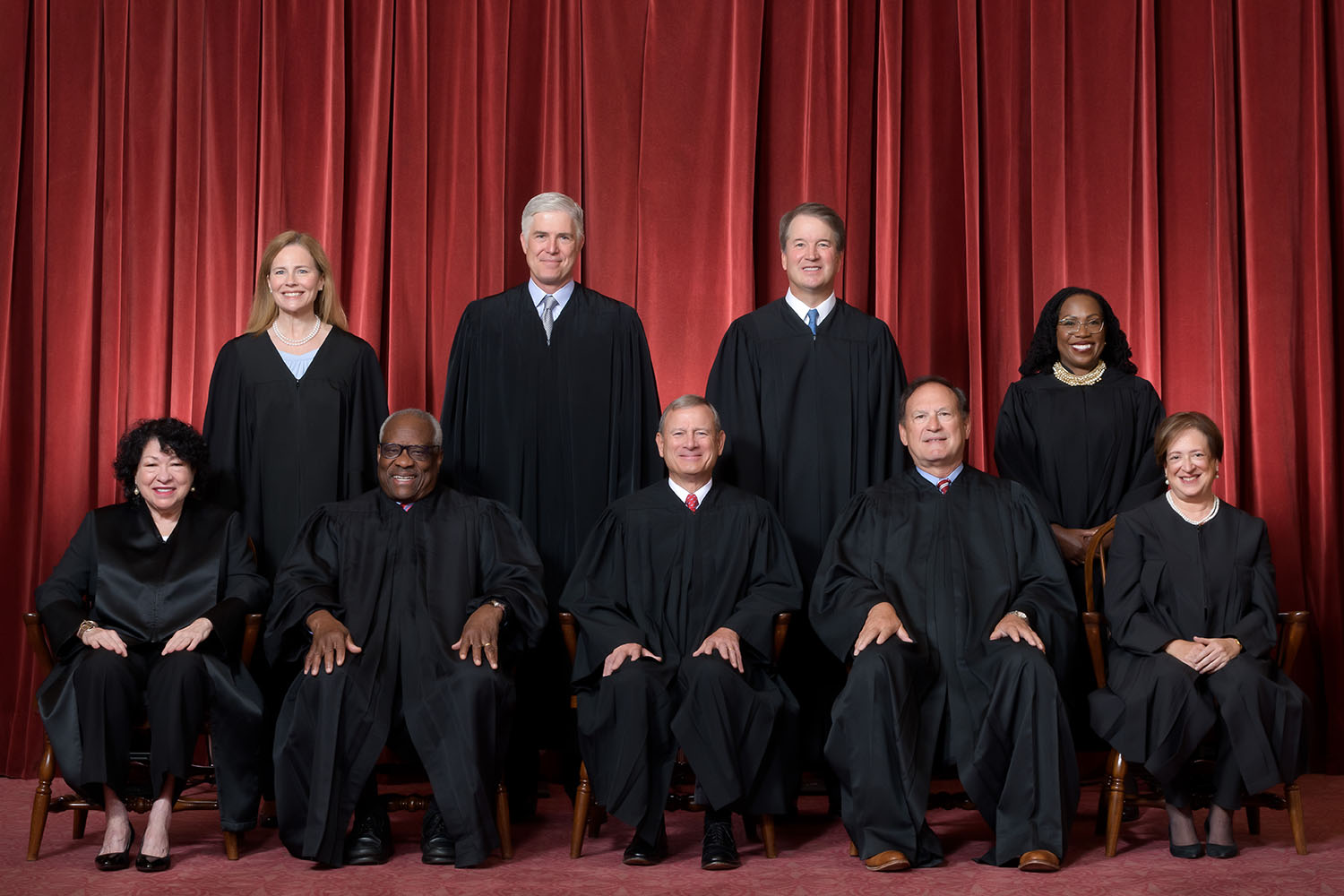
In addition to the majority opinion, authored by Roberts, six other justices wrote opinions.
These other opinions are not the official opinion of the court. They are often cited, and if concurring, can hold some weight. Dissenting opinions don’t carry any weight, though unscrupulous judges and lawyers sometimes cite to dissents as if they were The Court’s opinion.
Gorsuch wrote such a concurring opinion. In it he expresses why he came to the decision he did. No other justice agreed with his opinion enough to “sign” it. The term used is “joined”.
Barrett also wrote a concurring opinion, which nobody joined .
Kagan, the sharpest of the three shrews of The Court wrote a concurring opinion with her fellow agenda driven crones joining. This is to be expected. If Kagan writes an opinion, the other two will join.
Jackson loves to hear herself talk. She just loves to see her words in print. So she wrote a concurring opinion, but only agreeing with part of The Court’s opinion. She was satisfied with the judgment because it met her agenda driven goals. I’ve not read her opinion because I’m having a good weekend and want to keep the blood pressure under control.
Finally, we have the dissents. Thomas wrote a dissent. I need to read his dissent because he will explain why the president has the power to tariff at will.
Kavanaugh also wrote a dissent. Thomas didn’t join, which indicates that it wasn’t as pure as Thomas likes. Again, I’ll need to read it.
Alito joined with Kavanaugh, so we don’t have his words to evaluate.
The big takeaway from this case is not that Trump can’t impose tariffs at will; it is that he can’t do it under the International Emergency Economic Powers Act. This is no more of a loss for the President than The Court saying he couldn’t deploy the National Guard to Chicago using the law he cited.
The Court went so far as to say that Trump might even be legally allowed to deploy the Marines to Chicago, if he can’t enforce the law with the law enforcement officers.