

From Rebecca Harvey on Facebook:
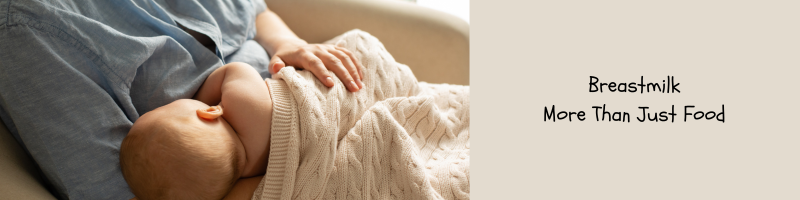
She thought she was studying milk. What she uncovered was a conversation. In 2008 evolutionary anthropologist Katie Hinde was working in a primate research lab in California, analyzing breast milk from rhesus macaque mothers. She had hundreds of samples and thousands of data points. Everything looked routine until one pattern refused to disappear.
Mothers raising sons produced milk richer in fat and protein. Mothers raising daughters produced a larger volume with different nutrient balances. It was consistent. Repeatable. And deeply uncomfortable for the scientific consensus.
Colleagues suggested error. Noise. Statistical coincidence. But Katie trusted the data. And the data pointed to a radical idea. Milk is not just nutrition. It is information. For decades biology treated breast milk as simple fuel. Calories in, growth out. But if milk were only calories, why would it change based on the sex of the baby? Katie kept going.
Across more than two hundred fifty mothers and over seven hundred sampling events, the story grew more complex. Younger first time mothers produced milk with fewer calories but significantly higher levels of cortisol, the stress hormone. The babies who drank it grew faster. They were also more alert, more cautious, and more anxious. Milk was not only building bodies. It was shaping behavior.
Then came the discovery that changed everything.
When a baby nurses, microscopic amounts of saliva flow back into the breast. That saliva carries biological signals about the infant’s immune system. If the baby is getting sick, the mother’s body detects it. Within hours the milk changes. White blood cells increase. Macrophages multiply. Targeted antibodies appear. When the baby recovers, the milk returns to baseline. This was not coincidence. It was call and response. A biological dialogue refined over millions of years. Invisible to science until someone thought to listen.
As Katie surveyed existing research, she found something disturbing. There were twice as many studies on erectile dysfunction as on breast milk composition. The first food every human consumes.
The substance that shaped our species. Largely ignored. So she did something bold. She launched a blog with a deliberately provocative name, Mammals Suck Milk. It attracted over a million readers in its first year. Parents. Doctors. Researchers. People asking questions science had skipped. The discoveries kept coming. Milk changes by time of day. Foremilk differs from hindmilk.
Human milk contains over two hundred oligosaccharides babies cannot digest because they exist to feed beneficial gut bacteria. Every mother’s milk is biologically unique.
In 2017 Katie brought this work to a TED stage. In 2020 it reached a global audience through the Netflix series Babies. Today at Arizona State University’s Comparative Lactation Lab, Dr. Katie Hinde continues shaping how medicine understands infant development, neonatal care, formula design, and public health. The implications are enormous.
Milk has been evolving for more than two hundred million years. Longer than dinosaurs walked the Earth. What we once dismissed as simple nutrition is one of the most sophisticated communication systems biology has ever produced. Katie Hinde did not just study milk. She revealed that nourishment is intelligence. A living responsive system shaping who we become before we ever speak. All because one scientist refused to accept that half the story was measurement error.
Sometimes the biggest revolutions begin by listening to what everyone else ignores.”
– thanks Dale McElroy
So I’m posting this because it changes things. It’s real; I went and looked up a bunch of stuff a few weeks ago when I first ran across this. It seemed ludicrous at the time, but it’s real. If I weren’t sicker than a dog, I’d go find it all again for y’all. Instead, today you can do your own research if you want to.
It’s interesting. It means a number of things. First, it means that our bodies recognize gender from the get go. Our bodies produce saliva that goes into our mothers, telling their breasts what kind of milk to feed to us, and that milk is significantly different for girls than it is for boys. And while this has interesting and far reaching information for gender scientists, it also means that we have a new way to study those few individuals who present as neither male nor female, or both. It means that maybe, just maybe, we can study the breast milk of intersex kids and find out what mom’s breastmilk is telling the child, and what the child is telling the breastmilk. Why is that important? Because for those individuals who have chromosomal issues or genetic problems and end up with neither or both sets of sexual genitalia, it gives doctors a key to where they will be when they grow up. It means we can make better decisions for the kids when they are very little, especially in those situations where it’s medically necessary to
“fix” the problem.
It means we can make better formula for those mothers who can’t or don’t breast feed. While I’ll always be a member of the “breast is best” club, I also know that several young women I’ve mentored over the years have had breast feeding issues that were causing more strife than connection, and at a certain point, you have to step back. Getting the child adequate nutrition and love is more important than pushing a breast that is being refused. There’s a time when it stops being reasonable… and having good quality options to feed our children in those times is important.
It also makes me wonder if I’m a person prone to illness because I didn’t get breast fed as a child. Are there antibodies or chemicals or whatnot that I should have received from my mother’s breastmilk that I never received? Is there a way for us to get that from new moms and transfer them to their infants, even in cases of maternal death, or adoption, or breast feeding issues?
It’s an amazing, landmark study. I hope to see it expanded upon in the near future.
The animal universe is filled with happenings we don’t fully understand. Most are finely tuned mechanisms of wonder.
Very interesting, and surprising in some ways, but not surprising on others.
.
Every day (it seems) I hear about research into how the human body works that is.. well… not earthshattering, but it does toss generally accepted knowledge to the wind. I recently watched a video about how the human body is nothing more than a bunch of chemicals signaling each other. No, I cannot remember the title. However, it was interesting to find that kidney function contributes to bone growth as well as brain health. They are so much more than a filter to remove waste. And, that is only part of it. Creating memory pathways in the brain relies on chemicals from all over the body, not just experiences and senses. Have a lack of those chemicals, and have a poor memory. (Again, if I could remember the name of the video, I would provide a link.)
.
One hope I have for/from AI is that hundreds, if not thousands of disparate studies could be examined to locate just these kinds of correlations. Right now, too many studies are published to actually review so research into how biology works is hampered.
Holy boob job Batman!! who knew??
thats awesome to learn.
“science “ has been monkeyed with (heh) for a long time. its great to see a scientist with an open mind proving theres way more to something.