

In 1969 a local news station in New York aired this public service announcement. It was a full admission that many children were feral and that the people who knew better knew you should have them inside, under control.
It was New York, so they might have a point. A child or minor out after 10pm was likely up to no good or was at risk. The city was much riskier then than now. So asking parents to verify the location of their children wasn’t a big deal.
Unfortunately, this spread around the country; by the mid-70s hundreds, if not thousands, of TV stations were saying the same thing every night.
The facts of the time were that children knew darn well that being in the house was bad juju.
The worst words a child could utter in most households were “I’m bored.” This was an invitation for Mom to find chores for the child to do. Many chores. There were as many chores as there were “I’m bored” utterances.
You were supposed to be outside. The exceptions were when it was too cold or it was too rainy. Other than that, a child should be outside playing, with interruptions for daily chores.
The rule of thumb for those in suburbia was, “You should be home when the streetlights come on.”
I know I lived that way.
Stranger Danger
In general, people believed they lived in safe places. Those neighborhoods might not be safe for others, but they were safe for you and your kids. Every mom was a part of the neighborhood mom group.
If Billy needed discipline, any of the neighborhood moms would dish it out; if it required physical discipline, then that neighborhood mom would deliver Billy to his mother for instant discipline.
The children were safe.
We talk about this within the Ren Fairie circuit. Children of performers, vendors, and staff are always under the watchful eye of fairie moms and dads. Young girls always have a chaperone.
More than one girl, turning 18, has wondered where all the protection went, only to find out that they were only a loud voice away.
This was the way back then.
In 1979, Etan Patz was taken while waiting for a school bus in New York. He was nearly seven years old. His parents had agreed to let him walk to the school bus stop two blocks away on his own. He never made it to school. He never made it home. He was never seen again.
The search was massive. There was no luck in finding him. Etan became the first milk-carton kid. The case expanded to cover more than just the local area.
The police were convinced that a stranger had taken Etan. Parents’s fears skyrocketed. Leading directly to “Stranger Danger”.
“Stranger Danger” became the watchword. It was drummed into kids at schools, at Boy and Girl Scouts, on TV. The FBI and McGruff the Crime Dog all pushing it.
It wasn’t until the mid-1990s that it started to fade. Research indicated that most child abductions were by family members, not strangers.
The harm had been done, though. Mothers were much less likely to let their children do anything outside alone. Instead, they kept them inside next to the family or acquaintance that was much more likely to kidnap their kid.
The Electronic Babysitter
The first of the electronic babysitters was the radio. A child could listen to the radio for hours, music, and audio plays to keep the mind alive.
Many a child learned to tell time so they could be in front of the radio when the latest episode of their favorite show was aired.
TV followed. Most parents limited the amount of TV time a child got. Most children of my age had limited TV time, my family rule was 1 hour per night and Saturday morning cartoons.
This made TV Guide the most important periodical in the house. You had to know what was showing to plan correctly.
It having been more than a few years, it could have been a certain number of hours per week. With my brother and I each getting the same amount.
Visiting my grandparents was strange. Grandpa would get up and turn on the TV. The TV stayed on all day long, even if nobody was in the living room watching. It was constant noise in the background.
As a kid, it was wonderful to have unlimited TV time.
Unfortunately, for busy mothers, the TV became the babysitter. You could put a kid in front of the “boob tube” and they would be entertained for hours.
The first video games did not have the same level of lock in that today’s games do. Regardless, there were thousands and thousands of kids that got video games, which turned them into even more of a TV junkie.
We had successfully traded free-range children to couch potatoes consuming CRT rays almost constantly.
Free Range Children
What did they call organic food in the 50s and 60s?
Food.
Children were expected to be outside. To be playing. To be making games and skinning knees.
Parents might set physical boundaries, but most boundaries were set by how far you could get on foot or a bike.
Learning to ride a bike was a giant step towards freedom. To go from a mile or so radius from home to 10+ miles was freedom unlimited.
I don’t believe my children went to the movies on their own until they had cars of their own. They never had the thrill of chaining their bikes to the nearly full bike rack that every theater and mall had and choosing their movie.
There were two theaters within bike distance when I was in 8th grade. One was only 2 miles away; the other was almost 7 miles away. It was worth it on a hot summer’s day to pedal to the big theater and then enjoy popcorn, AC, and a newly released movie.
There were baseball games in the cul-de-sacs and football games in the fields. Kids exploring the deep dark woods or going fishing. Building forts, treehouses, and playing hide and seek with friends.
Squirt gun battles and digging holes. Taking the canoe out, paddling upriver for an hour to work on your own VC tunnel system in the side of the bank. Taking a bag with some food and soda and a paperback book. Just living outside.
Those were the feral children of yesteryear. Those were the free range children of 40 years ago.
Today they are all but gone. The fears of the 70s and 80s. The electronic babysitters. The mothers that need their kids to be “engaged” constantly.
What have we taken from our children and grandchildren?
Postscript
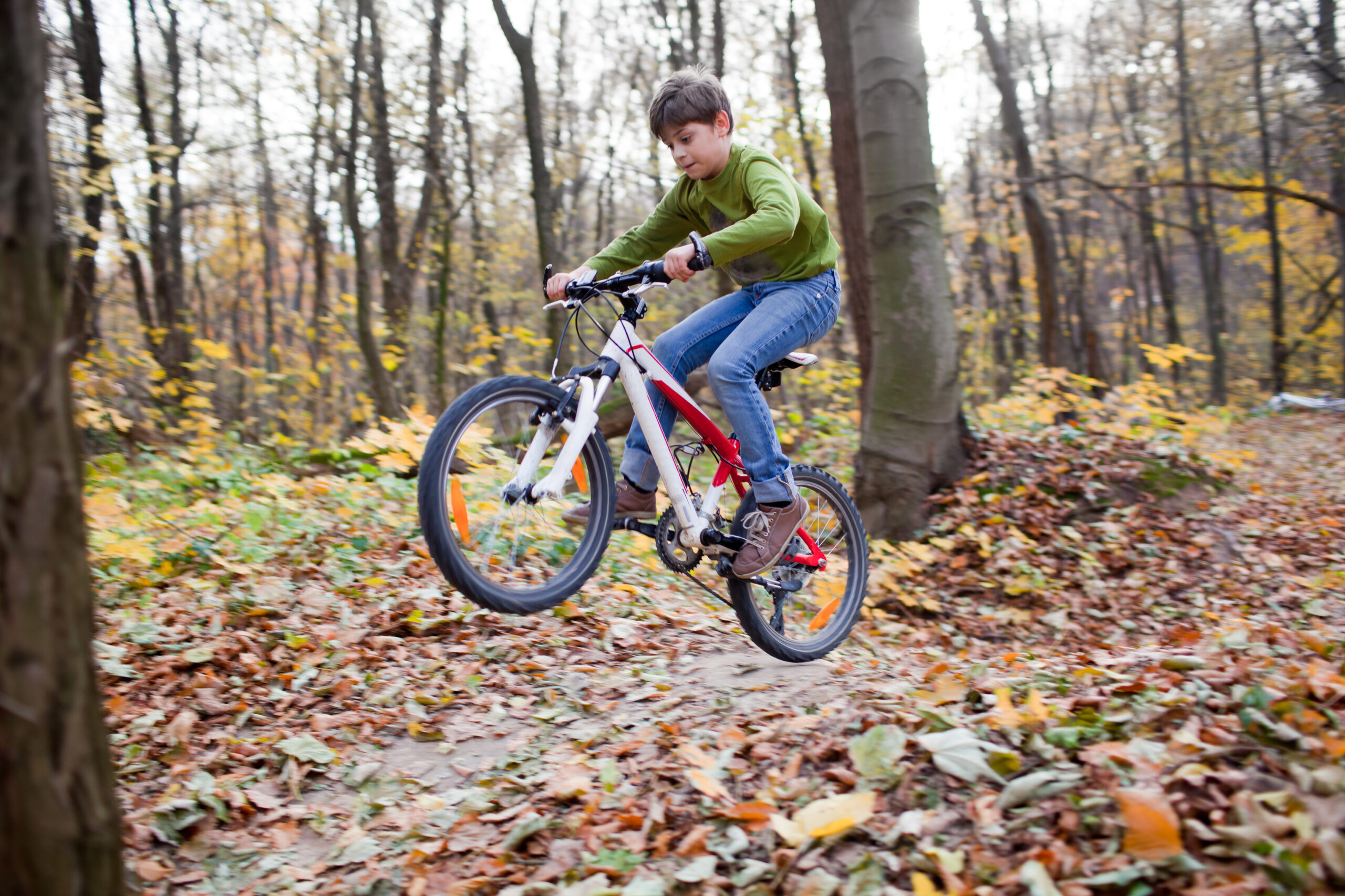
When I was searching for the feature image for today’s post, I put in the search “bicycle boy” There was only one picture in the first 100 that didn’t have a helmet on. Most of the images were organized groups, or there was a parent involved.
I remember mostly trying to find ways to earn money. When I was a kid; 5 CO2 capsules were $1 as was 250 22 cal. Pellets (or a carton of BB’s). That left me $3, maybe enough for some fishing lures. I had to cover the cost of my addiction to shooting and fishing.
I certainly see the changes. Growing up in the 1960s and 1970s (in suburbia in Holland) I walked or biked to school (no school buses in Holland). I played outside, rarely within view of Mom. I was active in boy scouts where we did many things by ourselves — two day solo hike for First Class badge, for example. Not to mention that we were trusted to climb trees, cut them down with an axe, and other fun things that can hurt. One particularly wild memory is the evening when the troop leaders took the whole troop on a walk into the forest as the sun set (no moon, but clear skies). We walked various trails to a clearing, where we were told: “ok, by patrols, make your way back to camp. Enjoy” It was called “dropping” (yes, the English word for a Dutch activity). Our patrol wandered over various trails, and along an unused rail track for a while, until we got back to camp around 11:30 pm. There was a nice campfire waiting for us, and to our surprise we were the first group to get back. The rest trickled in over the next two hours.
The notion of “stranger danger” is familiar from my childhood, though. Not that the problem was common in my experience. Not sure if it was more common in big cities. Is it more common now, or just more of a perception? More common in the USA than in Holland? No idea. Possibly, part of the issue is that child molesters are no longer routinely killed, as they should be.
Would I support a mandatory death penalty for child molesters? Hell yes. For child pornographers? Absolutely.
In 1988, the idea of “stranger danger” became widespread due to media bias. From an article in 1988: “Although the National Center for Missing and Exploited Children revised its estimates of stranger abductions to 4,000 to 20,000 per year, the earlier figure of 50,000 continues to be widely quoted…” (OJP.gov – https://www.ojp.gov/ncjrs/virtual-library/abstracts/missing-children-misleading-statistics). As of today, stranger abduction makes up less than ONE-ONE MILLIONTH of all abductions in the United States (https://letgrow.org/crime-statistics/). From the same page you can find a bunch of stats on how damn safe it is to live in America today.
.
By pretty much every metric and standard, America in 2025 is VASTLY more safe than America in the 1980s. Crime rates are down. Murder rates are down. Violent crime is down. Abductions are down. Gang activity is down. Pretty much everything is down except costs and taxes.
.
So why do we still think it’s dangerous to let our kids play outside, walk to the bus stop alone, or disappear off into the woods for an afternoon? Media bias. PERIOD. The media is the one and only factor that we can demonstrate is behind this belief that somehow, our children are constantly in danger. One of the sites I looked at said you are five times more likely to have an identical twin than you are to get shot in a school.