
Skills

A chef kissing his fingers and looking at a bowl of soup.

The Weekly Feast – Hubbard Squash Soup

Squash soups are a favorite of mine. Because dairy and I don’t get along, I can’t indulge in my favorite chowders anymore (I don’t care what anyone says, chowder made with oatmilk is just not the same). Squash soups can be blended to give an impression of being creamy, when there’s not even a drizzle of dairy in them. Also, if you do need to add a bit of milk for flavor, oatmilk will do just fine because it’s a background thing and not the star. This is my recipe for Hubbard squash soup, and it’s really delicious. It’s great when you have to feed a crowd, because a single of these odd colored squashes is enough to feed a family of 20. Today you can get smaller ones, and indeed, my local grocery store has Hubbard squashes that are about the size of an acorn squash, but there’s something wonderful about using a huge Hubbard squash. They look like they belong in the Jurassic period. LOL!

Ingredients:

  • 2 lbs squash peeled and cubed
  • 3 onions diced
  • 3 cups chicken or vegetable broth
  • 1/2 cup protein, boiled then minced
  • 2 egg yolks, beaten
  • 1 tsp salt
  • 2 tbsp of sugar and 1 tbsp each of cinnamon & ginger, mixed together

Add the squash and onions to your broth, and bring it to a full, rolling boil. Reduce the heat and cook until the squash is tender. If you want a “creamy” soup, cook until it’s falling apart soft, and if you prefer a more clear broth with chunks, stop when just tender to the fork.

Your protein can be pork, chicken, or even vegetarian options such as seitan or walnuts. Boil meat until it’s very soft and falling apart (think pulled pork consistency) and then shred it with a fork or mince it up into very small pieces. Stir this into the soup along with the egg yolks and salt. Stir gently, then allow to cook for a few minutes.

When putting out the soup, set the sugar and spice mixture on the side in a small bowl, with spoons. Allow people to season to their own taste.

Serve this soup as a first course to a feast, or offer it with a salad and a more substantial meat.

I make considerably more of this recipe than is called for, because it freezes well and I like having convenient lunches I can just pop into the microwave later. A large batch takes the same amount of time and effort as a small batch, so why not “go big”?

Notes:

When I make this, I use 10 cups of broth and about 5 or 6 pounds of cut up squash. I use one very large Spanish onion and one regular sized cooking onion. I also like it to be meaty and hearty, as it’s usually all we’re going to eat, so I use about 3 or 4 cups of shredded chicken. I increase the egg yolks to 3, to thicken the soup, making it much more “creamy” or “silky” in texture. I used Himalayan Pink Salt, about 1.5 tsp, and a sprinkle of pepper on the top of each served bowl of soup.

This soup is incredibly thick and hearty, much moreso than you might think.  When my kids were younger, I used to make this a lot. They  suggested that the squash was kind of lost in the broth, and that it tasted rather like chicken noodle soup. This is a plus, in my opinion, as the soup was full of all sorts of good things for the kids that they wouldn’t normally eat. I’m all for hiding the good stuff in yummy dishes!


A bowl of hubbard squash soup.
Allyson’s Hubbard Squash Soup.


Cooking in Clay

Cover of The Clay Table, showing a clay pot over hot coals.My newest cookbook is now available!
From the back cover:

Clay pots are probably the oldest cookware known to humans. Since not long after we harnessed fire, we’ve been learning new and improved ways to make cooking vessels, and clay was an obvious early choice. When fired, it’s hard, heat resistant, and heat retaining. It holds liquids and solids equally well. And best, clay can be pressed into any shape. This small cookbook covers five recipes from each of five different time periods: Anglo-Saxon, Viking, Medieval, 18th Century American, and modern day. Each uses a clay cooking vessel, be it pot, pipkin, tagine, or pan. They are tasty additions to any modern menu, while still touching on the history of early human cooking. M. Allyson Szabo is the author of The Re-Enactor’s Cookbook, and Cook Small, Live Large! Her interest in all things historical and kitchen oriented has served her well, and she produces cookbooks that enlighten and educate with a conversational flair. Readers at all levels of cooking can enjoy her books!

So I don’t usually toot my own horn here on the blog, but I did want to post this up because it lends itself well to prepping and how to cook during an emergency. While the recipes in the book are a bit fancier than you’re likely to make during a major emergency, the methods you’ll learn will be useful.

If you can find clay, you can make pots. Once you have pots, you can cook. You can boil water to make sure it’s safe to drink. You can wash, shave, do dishes. The book doesn’t go into how one makes pots, but there are tons of amazing YouTube videos and articles on the subject that you can tap into.

An A-frame shelter open to a fire.

Prepping – Shelter

There are lots of different types of shelter that we have access to. As with most things “prepper” related, everyone has a couple of opinions, and many of them clash. Basically, the idea is that you should have access to some kind of shelter in the first three hours of an emergency. It’s a good target to aim for, but it requires a lot of forethought and/or skill to pull it off.

The first kind of shelter that most of us have is our home. If you can stay at home, you probably should. Your home has all your food, your beds, your comfort items, and you know it. If you’re the type of person who’s been prepping a while, you probably have a plan in place for how to keep your home safe from raiders or marauders, and so that makes it one of the safest places you can be. A roof with four walls and a stout door really does trump most other types of shelter.

What if your home isn’t available, though? Whether it’s because you’ve been caught out when the emergency occurred, or a flash flood has washed away your home, or a tornado has ripped it into shreds, or any other reason, home is no longer safe. Your next easiest (and possibly safest, in many cases) form of shelter is your vehicle. You can cover the windows for privacy, you can lock the doors, and it’s mobile so you can move it to a safer place if things get hairy wherever you are. Your car also has the ability to hump more goods than you can by yourself. Again, it’s a fairly warm place (at least in comparison with outside), the doors lock, and it’s yours. You can formulate a plan around your vehicle long before you ever need it.

With your home and vehicle out of the picture, what else can you do? Well, that depends a lot on your strength, ingenuity, where you are, the time of year/weather/temperature, and lots of other things.

Read More

wooden cubes with words from the computer, software, internet categorie . This image belongs to the series cube with computer, software, internet words. The series consists of frequently used words in the categorie computer, software, internet

WYSIAYG vs WYSIWYG

I started my computer career with the command line, or as it is known today, the CLI.

Almost everything I do is done via CLI.

I’ve had clients that had hosts in China, Ukraine, and London. They all look the same to me because they are just another window next to the other windows on my desktop.

When programming, my hands seldom leave the keyboard. I don’t need to use the mouse to program. It is mostly done with control key sequences.

When I need to configure something, I use a text editor and edit the configuration file. If the configuration file is JSON, I use JSON CLI tools to manipulate the file. Everything is done via the command line.

Even this post is done from “the command line.” I am typing raw HTML into a simple text editor. So an aside is written as:

<div class="aside">This is the aside</div>

Which renders as

This is the aside

The editor also has a visual editor. What we call a “What You See Is What You Get” or WYSIWYG.

In the WYSIWYG, you type, and it is formatted close to what it will look like when presented in a web browser.

You have likely used a word processor like Microsoft Word, Apple’s old Mac Write, or the modern LibreOffice. If you’ve used Google Docs, you have used the online version of LibreOffice.

The idea is that you can look at what you type in these WYSIWYG editors and that is what it will look like when printed.

We have another term for Graphical User Interfaces, WYSIAYG, or What You See Is All You Get.

What do I mean by that? Well, if you have a GUI that performs configuration options, then only the options that are implemented in the GUI are available to you through the GUI.

The new level 3 managed switch has a web GUI. It is rather nice. You can see the status of each port. There are pleasant drop-downs to give you choices.

One of the issues I needed to deal with was to get DHCP running on it, rather than the old DHCP server.

After fumble fingering my way through the interface, I had a working configuration.

The other day, I wanted to set up network booting. I am installing Linux on so many machines, both virtual and bare-metal, that I wanted a simple method to use. Network booting seemed like the answer.

This requires setting the “next-server” and “bootfile” options in the DHCP configuration file.

There is NO place in the web GUI to do so. It is available through the CLI. Undocumented, of course.

WYSIAYG. I muddled through, I got it working. I can now do a network install anytime I want. And I can provide multiple options.

Which leads me to the root cause of this rant.

They are now building CLI tools that require CLI tools to configure them. And the CLI tools that do the configuration are not well documented because you should use the CLI management tool!

I needed to install incus on a system to configure a working OVN network! I am so frustrated right now that I could scream.

salmon knishes cooling on a rack

The Weekly Feast – Yom Kippur Knishes

I preface this by saying that I’m not Jewish. However, having dated several Jews over the years, I can tell you that the food is INCREDIBLE. Since Yom Kippur began on Friday at sundown, I thought this delicious parve (meaning it can be eaten any time by Jews, provided they aren’t fasting) dish would be just perfect to share today. Remember that Yom Kippur is not a “happy” holiday; it’s a religious time of reflection and introspection. Mostly, people who celebrate Yom Kippur just want to be left alone for their 25 hours of attonement. After the fast, families tend to enjoy a small feast together.

Ingredients:

  • 1 package puff pastry dough
  • 1 large onion, diced and sauteed
  • 2 (7- and- 3/4-ounce) cans salmon
  • 2 medium potatoes, cooked, cooled, and drained
  • 2 eggs, whisked (for egg wash)
  • sesame seeds, for topping
  • 1/4 teaspoon pepper
  • 1 teaspoon salt

Defrost the dough per package directions. Pay attention to this, as you don’t want it to be too moist and melty, but it can’t be frozen either. Roll out the dough to 1/4″ thick, and then cut into 3-1/2″ squares.

Combine all the ingredients for the filling, and mash it very fine. You can use a food processor if you want, but it’s better to do it by hand. You want it to be fairly smooth, almost like a pate, so that it fills the pastry well. Put a heaping tablespoon of filling into the center of each square. Fold the dough over, and press to seal. You can do this “pirogi style” (fold it in half, seal with fork tines for a pretty edge) or Jewish style (fold the corners up and seal it, making it back into a square, then flip it over and put the seam side down. Put your knishes onto a parchment paper lined cookie sheet.

Brush the knishes with the egg wash, then sprinkle with sesame seeds. Bake at 350*F for 40 minutes, or until they are golden brown.

Notes:

If you celebrate Yom Kippur, these are designed to be eaten AFTER you’re done fasting. You can make them ahead of time, and then just reheat them easily enough. They can tide you over until the rest of your meal is ready! If you aren’t Jewish, these can be enjoyed anytime. As a bonus, they’re also safe to feed to observant Jewish friends.

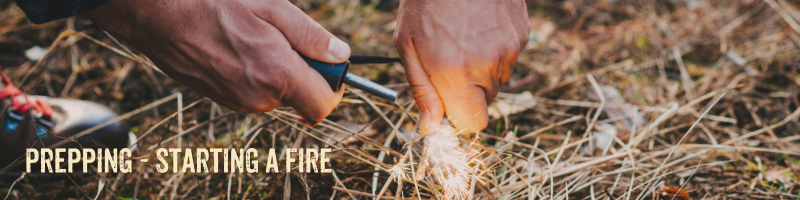
a person using a ferro rod to make a fire

Prepping – Starting a Fire

I’ve talked about having access to fire in the past, but I haven’t really gotten in depth about how to start one. I figured that was a decent place to go, this Friday, what with all the storm disaster stuff going on. This is a really complex topic, and I’m going to include some videos so that you can see as well as read about the subject. If you have more information, please feel free to add it in the comments below!

So fire is started when three elements come together: fuel, oxygen, and heat. If you have all three, you have what you need to start or continue a fire. Take one away, and if a fire has already started, it will die out. That’s the science end of it. (CalSafe)

We have lots of ways of starting fire, whether it’s for pleasure, cooking, heat, or protection. The easy methods are things like lighters, everstrike matches (metal “matchsticks” that sit in fuel), blow torches, and that sort of thing. Generally speaking, these methods “just work” when you use them. They provide enough of the three elements that you can get a fire going. But what if you don’t have one of these easy methods? What if your fuel has run out, or your flint is used up?

There are ways to start fires that are “in the middle” when it comes to difficulty level. Regular matches are in this category (because they can easily get damp, don’t stay lit very long, and have a tendency to dissolve over time). Strike-anywhere matches are less prone to problems, and usually have much longer stems, which makes them easier to hold. Unfortunately, they aren’t literally strike anywhere, but require a rough surface of some kind to get them lit. I would put the most modern style of ferro rods into this category as well.

Then there are the methods that require a certain level of skill: flint and steel, bow drills, other types of friction styles, and the more esoteric types like using magnifying glasses. To use any of these requires practice, repetition, and education. It is important to learn at least a couple of these more difficult methods in advance of emergencies, because it’s too easy to lose all the easier methods of making fire. Read More

A bowl of turkey noodle soup

The Weekly Feast – Turkey Noodle Soup

That nip in the evening air, the scent of rain in the distance, and the sound of falling leaves in the forest behind the house all call to me that it’s soup weather! My favorite part about soup is that you can make pretty much anything into soup if you really want to. My turkey noodle soup is a great example. On Sunday evening, we treated ourselves to a lovely turkey breast for our supper. It was much too large for us to finish, even though it wasn’t a whole turkey, and so I diligently denuded the carcass of meat and put it into the fridge for use later in the week. Then it occurred to me that I ought to make broth!

This is a great recipe to use if you’ve got leftover carcass of any kind. If you like to pick up rotisserie chicken, it’s perfect for making this kind of soup.

Ingredients for the stock/broth:

  • 1 stripped carcass (turkey or chicken), with whatever skin and gristle there is
  • any drippings from the cooking process
  • the skin of 1 or more onion
  • several crushed garlic cloves, skin on
  • the peelings of 1 or more carrots
  • the leafy tops of 1 or more stalks of celery
  • salt and pepper to taste
  • fresh herbs to taste (optional)

Read More

Filler

I’m exhausted. I’ve been pulling fiber for the last two days. All part of an infrastructure upgrade.

Normally, pulling cable in a modern datacenter is pretty easy. This is not a modern datacenter.

The original cable runs were CAT6 with RJ45 connectors. When the cables were installed, the installation had to be nondestructive. No holes in walls, no holes in floors. Hide the cables as best you can.

One of the cables we removed was to a defunct workstation. It had been run across the floor and then covered with a protective layer to keep it from getting cut or snagged. The outer insulation had been ripped away. There was bare copper showing. Fortunately, that particular workstation hasn’t been in place for a few years.

The backbone switch was mounted in the basement. Not a real issue. The people who pulled some of the last cable didn’t bother to put in any cable hangers. So it had loops just dangling.

There were drops that could not be identified. Those are now disconnected, but nobody complained, so nothing was taken offline.

I’ve found a new favorite cable organizer.

Cable Management Wire Organizer

These are reusable. They open fully and will hold many cat6 and even more fiber. They have the 3M foam double-sided tape on them. This works great against smooth, clean surfaces.

The place where they shine is that they also have a hole designed for a #6 screw. In places where there were no smooth surfaces, much less clean surfaces. The sticky held them in place long enough to drive a screw.

There are no more dangling cables.

My only hope is that there are no more configuration issues with the new switch. *caugh*DHCP*caugh*

A flooded community

Prepping – After a Flood

It seems appropriate to talk about what to do after a flood, right now. With all the devastation down in the southern states, it’s on all our minds.

First and foremost, if you’re in the path of something and you know about it, listen to locals. If you’re asked to evacuate, DO SO. The people in the Carolinas and Tennessee didn’t receive evacuation orders until after it was too late, but people in Florida knew what was coming. Those who chose to stay behind did so at their own peril. When you ignore an evacuation order, you are telling the authorities that you are entirely on your own, and do not expect any aid from them. You do so knowing that 911 won’t work, that health and medical emergencies will need to be dealt with in house, and that you’ve decided you know better than the weatherman.

I realize it can be hard to leave everything behind. I’ve done it twice in my life, and it wasn’t any easier the second time than it was the first. What you’re leaving behind is Stuff and Things, and I guarantee you, Stuff and Things are not nearly important as Friends and Family. I speak with experience and authority here. Leaving ahead of an emergency allows you to leave on your own terms.  You can take the time to pack bags, to grab family photographs and important documentation. You can bring along family pets, and favorite children’s toys. Leaving (or attempting to leave) once the emergency is upon you means you’re leaving on the emergency’s terms, rather than your own. You may not have time to find the cat cowering in the basement, or find the woobie your kid can’t sleep without.

If you can’t leave, for whatever reason, then you need to make reasonable plans for what is likely to happen, what could happen, and what is unlikely to happen. There will always be things that can’t be planned for (like the current destruction of Asheville, for example), but you have to do your best.

In my area, we deal with freezing rain often enough that we know the power will go out at least once, and likely twice over the winter. In the spring, it’s wet weather and high winds knocking down trees and taking out power lines. The most likely occurrence is that we’ll be without power for a day or less. What might happen is that we’re out of power for a couple of days, and our water might be affected. It’s unlikely that we’ll be out for more than a few days, but we have things on hand to make that less troublesome if it does happen. We’ll be very busy canning all the stuff in our freezer, honestly.

Read More

The Weekly Feast – Stuffed Squash With Sausage

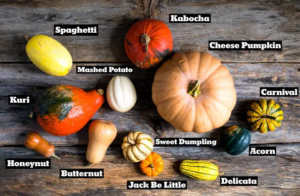
There are foods that I consider to be autumn foods. Squash, pumpkin, sage sausage, and soups in general come to mind. I love cooking seasonal foods, partly because it tends to be a cheaper way of eating, and partly because there’s just something scrumptious about picking up a squash that was in a field 2 hours ago, and baking it up. Today’s recipe is for a stuffed squash, but I haven’t told you what type. The honest answer is, it doesn’t really matter. I found Sweet Dumpling Squash on sale today, but had originally gone looking for acorn. I will say that Spaghetti and Butternut Squash don’t do as well in this recipe, only because they don’t have a big hole in them to stuff full of yumminess. But if that’s what floats your boat, go for it! You do you, Boo!

Varieties of Winter Squash

Ingredients:

  • 2 winter squash, halved and cleaned of seeds
  • 1 lb ground sausage, sage/breakfast style
  • 1 small onion, diced
  • 1 small carrot, diced
  • 1 rib celery, diced
  • 2 to 5 cloves garlic, minced
  • 1/2 cup of COOKED rice, barley, quinoa, or other grain
  • spices, to taste (either sweet or savory, your choice)
  • cheese, for topping (optional)
  • walnuts, for topping (optional)

Preheat your oven to 400F. Place the four halves of squash, open side down, onto a rimmed baking sheet. Add a bit of water (this helps by steaming the flesh of the squash slightly), and put in the oven for 30 minutes to an hour. Check after 30 minutes for doneness; you want the squash to be soft through, but not brown or caramelized at all.

While the squash is cooking, brown up your ground sausage in a cast iron pan or pot. I prefer to use a nice sage sausage for this, because it’s my go-to flavor for this time of year. If you prefer sweet or hot Italian, go for it. If you don’t do pork, feel free to substitute in ground beef, tofu, TVP, venison, squirrel, turkey, or chicken. If you’re not using a sausage, pick up a good “sausage spice” to add to your ground meat, or it will be bland later. You don’t want bland.

When the sausage is thoroughly browned but not yet crispy, use a slotted spoon to remove it from the pot. Leave behind as much of the fat as you can (add olive oil if there isn’t enough in the pan). Toss in your onions, carrots, and celery, and saute until they’re just soft and starting to brown up. Add in the garlic, and saute until it releases its oils, about 30 seconds to a minute. If there’s a decent amount of meat or veg stuck to the bottom of the pan, deglaze with a splash of red wine, using a wooden spoon to mix thoroughly. Add in the cooked grain, and stir to incorporate. The grain should soak up any excess liquid. Add in the meat, and then spice to your taste.

When it comes to spicing this, you can go either savory or sweet. For savory, consider salt and pepper, oregano, thyme, and sage. If you go sweet, start with salt and pepper, then add in a bit of sweet paprika (get a GOOD type like Szeged rather than using glorified red dyed sawdust like McCormick). Then stir in either a bit of maple syrup (my favorite) or some dark brown sugar. If you go the sweet route, also consider tossing in some raisins and dried cranberries or cherries for a delicious flavor burst.

Once the squash is ready, fill the hole with your meat mixture, adding an equal amount to each half. Top with cheese if you’ve decided on savory, or nuts and berries if you’re going sweet. Return to the oven and bake at 400F for 15 minutes or so, just until everything is hot through and the cheese, if used, is thoroughly melted.

Notes:

If you have picky kids who are likely to eat the filling and then ignore the squash, do what we did: cut the squash up and add the filling to it. Make it into a casserole! This way, they have to eat the squash to get at the “good bits” and you get to feed them well. 😉

This is one of those “do whatever you like” recipes that changes every time I make it. I’ve made vegan versions with Beyond Sausage, or with diced up vegan Field Roast sausages, or with tofu. I’ve made non-pork versions for friends who don’t do pig, and it’s turned out beautiful. If you want it to be a side dish, simply skip the protein entirely and stuff the squash with your grain and whatever veggies you have on hand. Shredded brussel sprouts are pretty good in this, especially when mixed with a Tex-Mex wild rice blend and raisins.

Enjoy!