
Rowan Atkinson has it right.
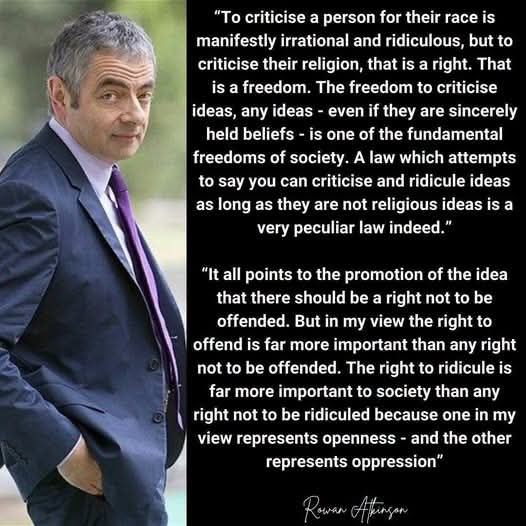
Note Mr. Atkinson’s words above. Read it over a few times. I did.
“To criticize a person for their race is manifestly irrational and ridiculous…”
Note that it doesn’t say it’s morally or ethically wrong. It doesn’t say you’re a bad person for doing it (though it implies you’re being silly). It’s not RIGHT, but that doesn’t necessarily make it wrong.
“…but to criticize their religion, that is a right.”
You can criticize someone for their race, and people might think you’re dumb, but if you criticize their religion, that is YOUR right. It’s a right. It’s a God-given right. That doesn’t just apply to the ones you dislike, by the by. I can criticize Christianity, Judaism, the multi-forms of paganism, all in one breath. That’s my right.
“That is a freedom. The freedom to criticize ideas, any ideas – even if they are sincerely held beliefs – is one of the fundamental freedoms of society.”
One might almost say that if you do NOT have the right to criticize ideas (any ideas, even sincerely held beliefs), then you are not living in a free society. If you are not permitted to criticize ideas, then how can you claim to be free at all?
“A law which attempts to say you can criticize and ridicule ideas as long as they are not religious ideas is a very peculiar law indeed.”
Why would such a law be peculiar? Because it restricts very stringent freedoms; the freedom of thought and the freedom of expression. If you aren’t free to think, and to express those thoughts, then you are not, in fact, free.
“It all points to the promotion of the idea that there should be a right not to be offended. But in my view the right to offend is far more important than any right not to be offended.”
Being offended by something is entirely internal. While offense can be triggered by outside forces (bad words, bad actors, etc), the actual act of being offended is 100% inside your own head. I can prove this, because those same things that made you offended don’t make your neighbor offended, and vice versa. Therefore, the offense is internal, not external. Of course, the moment “being offended” goes from the words someone says to fists or weapons, that’s an entirely other thing. Assault is not offensiveness. One is criminal, and the other is just a part of life. At some point, we’re all going to be offended because some Karen is spouting off. The thing is… the Karen? She really doesn’t matter.
“The right to ridicule is far more important to society than any right not to be ridiculed because one in my view represents openness – and the other represents oppression.”
Someone who is offended has not been harmed. If you’ve been harmed, then you can do something about it. Let me share a story with you.
A couple of weeks ago, I was heading up to the fort at way too early in the morning, and Chris offered to get me Dunkin for breakfast. As someone with a dairy allergy, I know exactly what I can and cannot eat at Dunkin, and I always state at the register, “I am a person with a dairy allergy, and it is life threatening.” There is no ambiguity about my allergy.
Well, I ordered a safe item, and happily took my bag and went off with Chris. A few miles later, I opened the bag to get out my food, and ran into cheese. I frowned, and assumed it was his sandwich. And then I realized the other two sandwiches were also covered in cheese. I couldn’t eat any of them.
I called Dunkin, and talked to the manager. I explained (and yes, I was angry and quite short, because this is poison to me) what happened, gave them my order number, and said I was very clear that I had an allergy. The woman basically said “Gee, sorry. I’ll give you a free sandwich, but really, it was just an honest mistake. I have a dairy allergy, and I can just take the cheese off.” I was offended.
The mistake she made, in giving me the sandwich with cheese, was actionable. I did go get my free sandwich, and then I talked to corporate because they are supposed to have an allergen awareness and I felt that her minimizing of my concerns was criminal. Corporate agreed, and they are doing something. That’s all I wanted, honestly.
My offense, on the other hand, was not actionable. I was pissed with her because I took her words to mean I should have just dealt with it. If she’d said those words to Chris, he may or may not have been offended, but likely not like I was. Regardless, she’s free to tell me what she wants. And I’m free to call corporate because what was BEHIND the words was dangerous.
The other side of that was an Italian place I went to with a friend. I told them I had a dairy allergy, and the apologized and said that they could not serve me. They were polite, offered to let me have free drinks while my friend ate if I wanted, and I appreciated their honesty and bluntness. It saved me being sick. I wasn’t offended in the least. Someone else might have felt offended because the restaurant didn’t carry food they could eat.
Offense is internal. Feel free to be offended. I won’t be the least bit offended if you are. Heh…

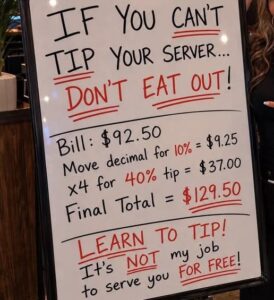 A (Right leaning) friend posted this image on FB yesterday. I decided to comment:
 This is “the hut.” It’s a one story with short attic, built entirely by Chris and the kids. Some of it is finished, and the rest of it is, as you can see, still waiting on siding. However, today it received a major upgrade. The window is in! As you can see, the front window is now in place, allowing light to come in. Of course, now I have to make curtains for it, so people can’t see in, but whatever. It works. LOL…
 I think it looks pretty spiffy. It seemed to go in quickly, too, as Chris and son went to work on it and it appeared to take less than an hour. I’m impressed. And did I mention there’s room for all the woodworking stuff now? Yay!
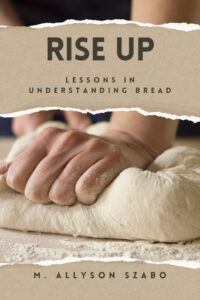 Well, I just ordered the proof/galley copy of my latest book. It’s been professionally edited, updated, fixed, futzed with. Provided there aren’t any major problems with the galley, it should be available on Amazon within two weeks. This will be my fourth cookbook. Once it hits the screens/shelves, I can start serious work on my 18th century cookbook, which is long overdue.