I recently picked up 8.75 inches of 5.5 DuraBar, a type of cast iron. This is to become the backplate for a lathe chuck.
Friday afternoon, I started work on the backplate.
Since I repaired me horizontal bandsaw, cutting 2.75 inches off the bar was trivial. While the saw was working its way through those 5.5+ inches, I turned the jaws around on the chuck and got ready.
My saw did an outstanding job. It was time to start working on the blank.
The first operation was to face the raw end. The raw end had a sticker on it and was too rough to think about. It had around 0.25 of variation.
Since this is an interrupted cut, it requires light cuts until we are cutting almost completely. I was taking 0.050 cuts at the end. About an hour to get the first face done.
Normally, you would flip the piece and face the other side so that the two faces are parallel to each other. Since the purpose of this job is to end up with one face perpendicular to the spindle, that was not required.
The next operation was to poke a hole through the center of the disk. I did that in three steps, spot drilling, 3/8in starter drill, then a 7/8in taper shank drill.
I then bored the hole out to 1.125inches. Perfect.
The next step was to turn down the face to create a 0.625 boss with a 0.25in radius. Doing that operation was time-consuming, but I got it done. It looked great. That huge corner radius made it work.
My only issue was that my 0.5″ button toolholder needs to be kicked out. I didn’t notice at first, which required some adjustments. All the final passes were free-handed.
That was the end of Friday’s progress. I would have done more, but I couldn’t find my large, 18″ adjustable wrench to get the chuck off.
Saturday started with getting the chuck off. I found a tool that I could use, a couple of light taps with a dead blow hammer and the chuck came loose. It is still held on by at least an inch of thread engagement.
You would rather not drop the chuck on your ways, it would damage them. I use a piece of 3/4in plywood. I then started unscrewing the chuck.
I was using my left hand to support the chuck.
I stupided.
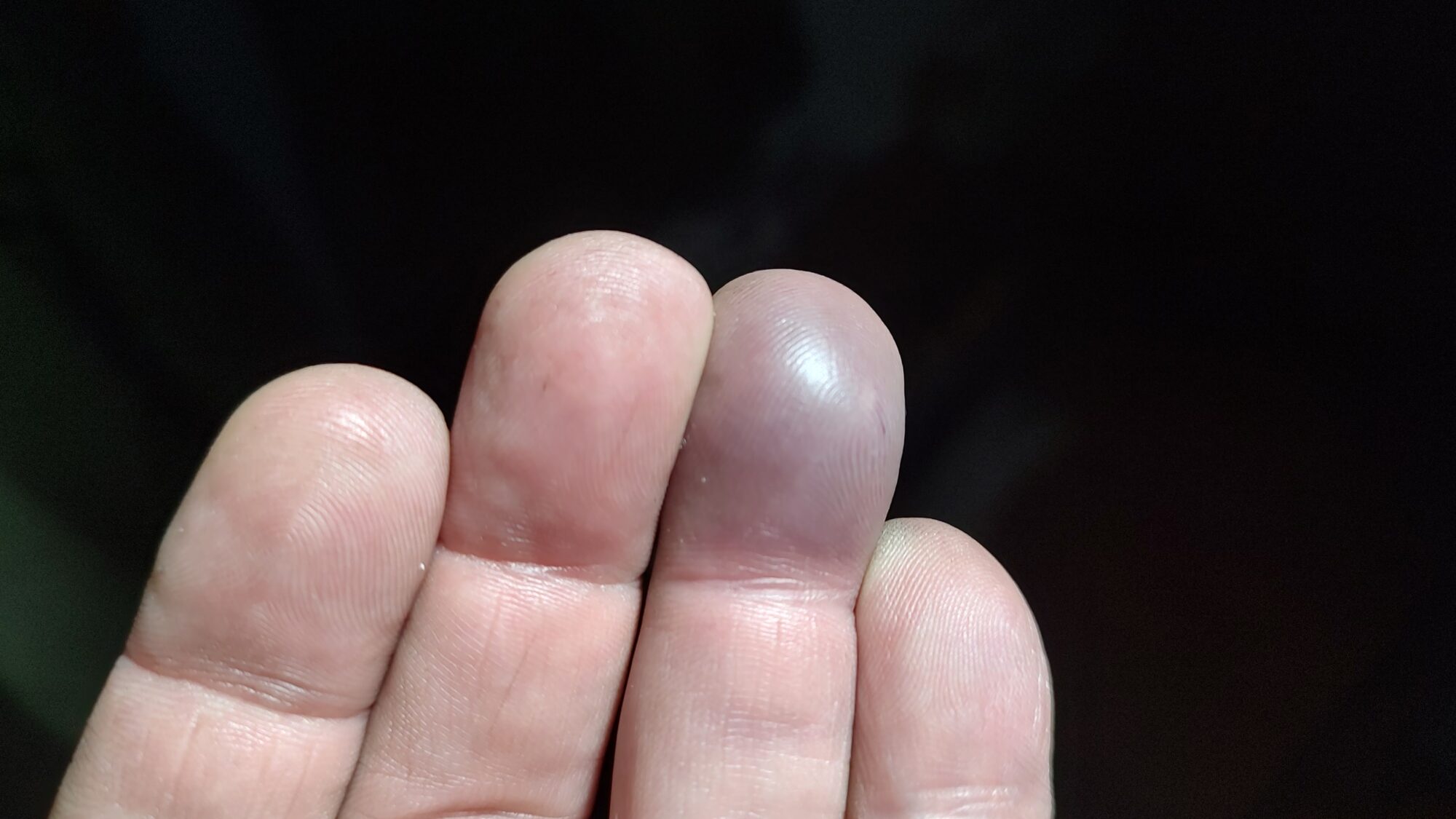
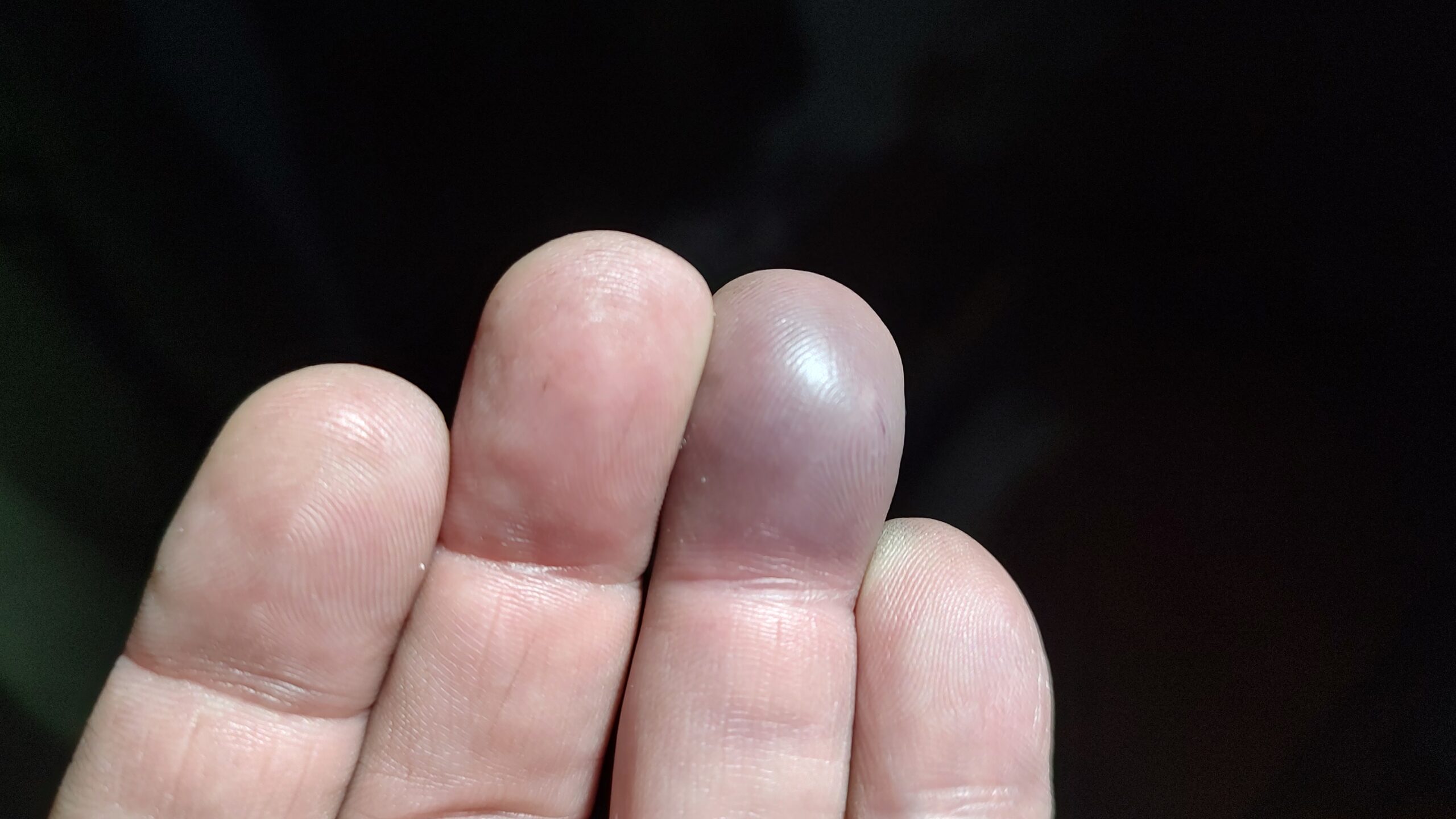
You can’t tell from that image, but my ring finger is the color of a purple grape. It is swollen by about 30%. It is no longer painful after taking meds.
Oh, did you suspect that I’m a touch typist? I use that finger often to type characters on the left of the keyboard.
Regardless, that stupid is even more stupid as I was contemplating making a cradle for the chuck, as Joe Pie suggested in one of his tips videos a few months ago.
I didn’t. I am suffering the consequences of my stupid.
After I had my “oops” I continued with my measurements. Turns out that a Craigslist purchase a couple of years ago has paid off again. I have not only my personally purchase’s 0-1″ micrometer, but that purchase came with 0-1″, 1-2″, 2-3″, 3-4″, 4-5″, and 5-6″. I’m happy to have found them again.
Once I have my measurements, I put the chuck back on the spindle and go to work boring to minor ID for 1 7/8×8 threads.
I hit my mark at 1.753 instead of my target of 1.750. Still within the specifications for 1 7/8×8.
Because I was set up to do the boring, I then bored to 1.887 0.250 deep. This is the most critical operation. The spindle has a registration boss at its base. This pocket needs to fit snugly on that boss. The better the fit, the more repeatable returning the chuck to the lathe will be.
I hit 1.8875. That’s spectacular for me. All is going well.
After lunch, I came back out and made that cradle. It took 15 minutes on the band saw.
That’s ready for the next time I need to pull the chuck.
I then cleaned up the lathe, cast iron chips had gone everywhere. Yes, I wear good protective eye wear.
The next operation is to single point the thread. This requires me to rotate the cross slide from 29 degrees to 119 degrees. This was done. I then indicated my tool post square.
It was time to cut threads.
This is where stupid number two comes in.
Normally, I use a dial indicator when cutting to depth. Because I wanted accurate locations, I used my micrometer stop.
That works for most things, but isn’t as accurate as using the micrometer stop. Nor is it as easy.
I had been using the micrometer stop for the boring operations. I now moved it out of the way to use the dial indicator.
And it doesn’t fit with the micrometer stop in its parking location.
So this is where error number two comes into play. I think I have a “regular” boring bar with a high-speed toolholder at the end. If I had bothered to find this and if I had bothered to grind a tool for grooving, I would have cut a relief groove inside that bore.
When you are cutting a thread on a lathe, the tool moves to the left in sync with the rotation of the spindle. At 8 threads per inch, the tool is moving at around 0.5 inches per second. I need to stop the forward motion at exactly the right spot. If I do not, then “bad things” will happen.
If I had that relief groove, I have more of a landing spot.
Using the dial indicator, if I over shoot, nothing bad happens. With the micrometer stop bad things can happen.
And bad things did happen. I missed.
Once I had everything straightened back out, I tried to recover.
No luck with that. I didn’t notice, but that crash rotated the cross slide, it rotated the tool post, it pulled the tool out of the toolholder. Yeah, everything was wrong. The good news is that nothing broke.
I’m cutting threads at the back of the hole, but I can’t seem to get things to work at the front. Nothing is working.
The tool post looks wonky. I slap a wrench on it and prepare to square it up again. As I start to loosen the nut, the entire cross slide rotates. That explains everything! I get the cross slide back in place and try again.
Nothing is working as expected. I can’t pick up the threads. I can’t seem to cut. It is just weird.
Looking hard at the boring bar, I decide to check to see if it is still square to the toolholder. It isn’t. That fixes it all, right?
Nope, the tool post is still twisted.
In the end, I get everything straightened out. I try to pick up the threads. At which point I realize that I’ve chewed the treats to shit.
The part is junked. I’ll be boring out the mess I made in the center, then that chuck of cast iron goes into the scrap bucket, and I’ll start all over again.
At the time I scrapped this part, I had about 6 hours of labor into it. I’m slow. I had turned around 4 pounds of cast iron into chips of the original 16 pounds.
Regardless, I had fun making chips.